Compare / Smile Data vs AI chat tools
Chatting with your practice data is easy. Getting the right number is the hard part.
Plenty of tools now let you ask your practice software a question in a chat. The difference is what the AI reads. Connect it straight to the raw database and it has to guess what each number means. Smile Data puts a semantic layer in between, so Smile Bot reads numbers that are already defined. This page compares the two approaches, not any one company.
A raw-database chat may be enough if
AI on the raw database
- You want quick, rough answers and will check anything important against your practice software yourself.
- Your questions are simple counts, such as how many appointments are booked tomorrow.
- Nobody else in the practice will read the number and act on it.
Choose Smile Data if
Smile Data
- You need answers that match your practice software to the penny.
- You count some things your own way, and want every answer to follow it.
- You want the answer saved as a dashboard that keeps itself up to date, for one office or every office.
Same question. Two very different paths.
A practice database stores numbers the way the software needs them, not the way an owner talks about them. “Production” alone can mean scheduled or completed, before or after write-offs. Something has to decide which one you meant.
The other way
- Raw databaseTables and codes, built for the software
- AIWorks out what each column means
- GuessesClose, and sometimes wrong
Smile Data
- Your databaseA full upload every night
- Semantic layerEvery number defined once, your way
- Smile Bot and dashboardsRead the definitions, never guess
- Exact answersAccurate to the penny
On the raw database, the AI decides
Each time you ask, the AI works out which tables and columns to use and what they mean. When it picks the reading you meant, the answer is right. When it does not, the answer still arrives in the same confident sentence.
With a semantic layer, you decide once
Smile Data defines every number once, in plain terms, set up for your organization: your definitions and your way of running. Smile Bot and every dashboard read from those definitions, so the same question gets the same answer, and it matches your practice software.
The approach, row by row.
This compares how the two approaches work, not any one product. Tools differ, so ask any vendor the questions further down.
Tables and codes, as your practice software stores them.
Numbers already defined in the semantic layer.
The AI, each time it answers.
Defined once, set up with your organization, and shown behind every number.
Depends on how the AI reads the tables that time.
Same definition, same answer.
Only if you explain them in the question.
Set once in the layer and used in every answer and every dashboard.
Up to you, against your practice software.
Checked against your practice software’s own reports, figure for figure, during setup.
Usually a chat reply.
A saved dashboard that keeps itself up to date, with access set user by user.
Only what is in the database it is connected to.
Accounting, phones, payroll, marketing and spreadsheets next to your practice numbers.
Depends on the tool.
A full upload every night, so nothing goes missing. Updates through the day depending on your practice software, hourly on Open Dental.
Depends on the tool. Ask whether anything runs on your server.
In Smile Data’s cloud, not on your server, so it does not slow your system down.
Approach-level comparison, as of Nov 2026. For how specific products describe their own AI, see the comparisons linked below.
Five questions to ask any AI chat tool.
What does the AI read?
The raw database, or numbers that are already defined? This one answer decides most of the rest.
Who decides what a number means?
Ask who defines production, collections and new patients, and whether you can change a definition.
Same question, same number?
Ask the same question on two different days. The number should only change when your practice did.
Does it match your reports?
Pull one report in your practice software and ask the tool for the same thing. The totals should match.
Does anything run on your server?
Find out where the work happens, and whether it can slow down the system your front desk uses all day.
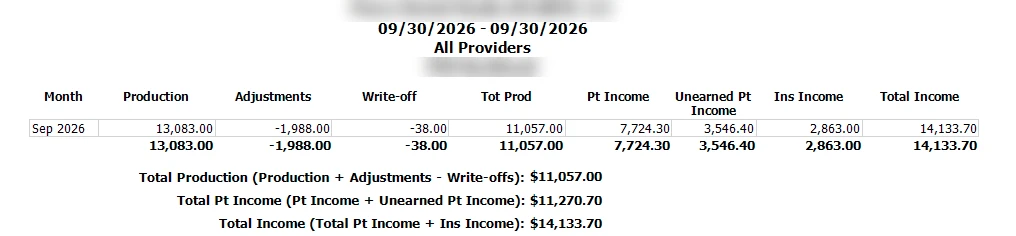
Pull the same report in Smile Data and in your practice software.
Same period, same totals. If a number does not match, our team finds out why and fixes it.
Same totals

About AI chat tools.
What is a semantic layer?
A set of definitions that sits between your data and the AI. It says, once and in plain terms, what each number means: which procedures count as production, when a patient counts as new, how a working day is counted. The AI reads the definitions instead of guessing from raw tables.
Is “chat PMS” a product?
We could not find a dental product by that name, as of Nov 2026. People use it to mean an AI you can chat with about your practice management software, which is what this page covers.
Can I talk to Smile Bot instead of typing?
Yes. Ask out loud or type. Smile Bot answers and puts the dashboard behind the answer on screen, and you can save it.
Which practice software does Smile Data work with?
Open Dental, Dentrix, Eaglesoft, Planet DDS and more than a dozen other server-based systems. The full list is on the integrations page.
This page compares two approaches and names no product. Product names on the linked pages are trademarks of their respective owners.
Comparisons with specific tools
Ask a question. Check the number.
Sign up, connect your practice software, and compare Smile Bot’s answer with your own reports.
No contract. No onboarding fee. 30-day money-back guarantee.